
 Start5 photos
Project · Custom fabrication
Photo 1 of 6
Swipe, or use the arrows, to go step by step.
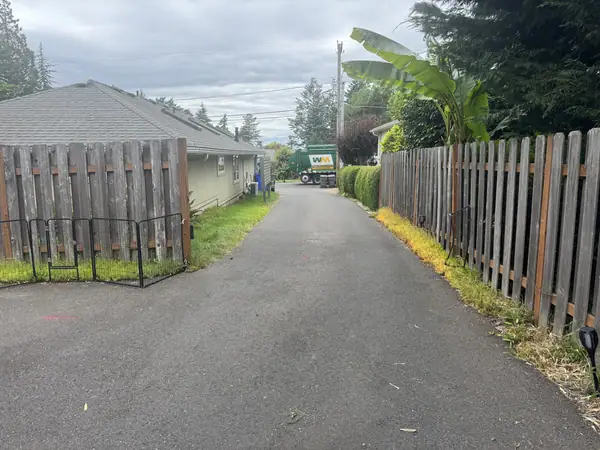
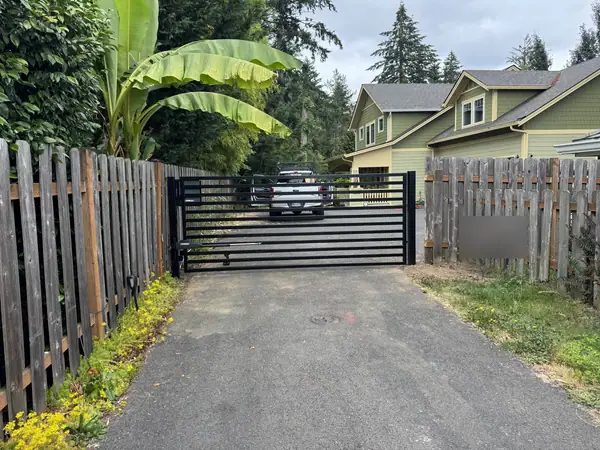
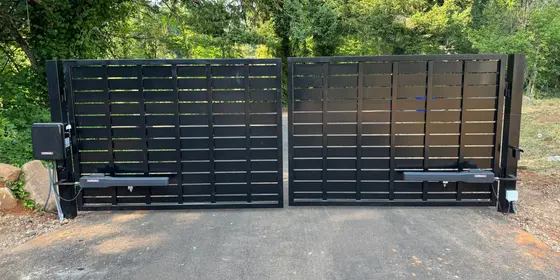
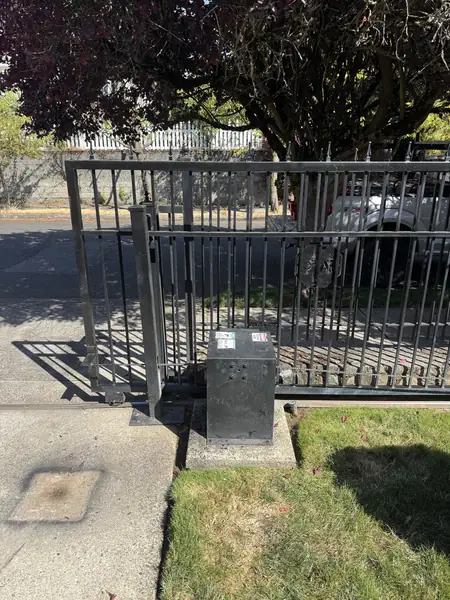
This long driveway sat between two wood fences with nothing to close it off from the street.
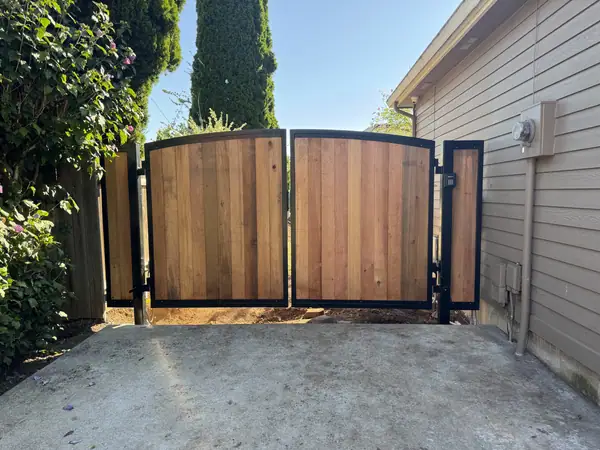
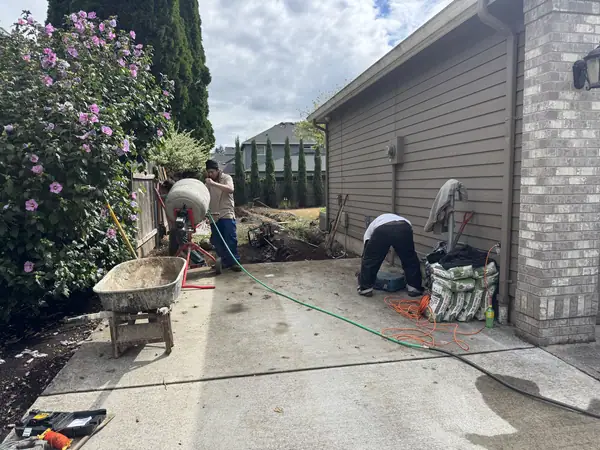
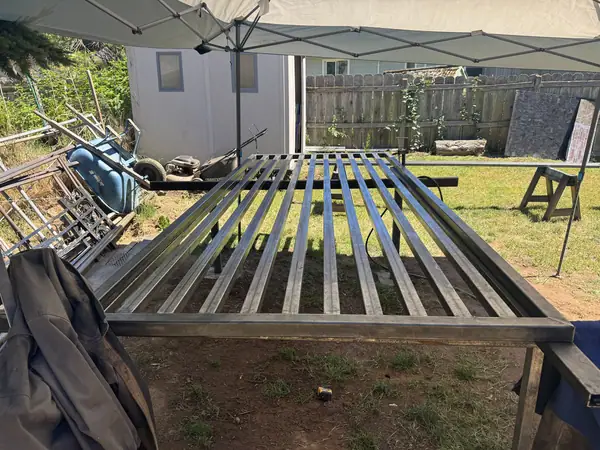
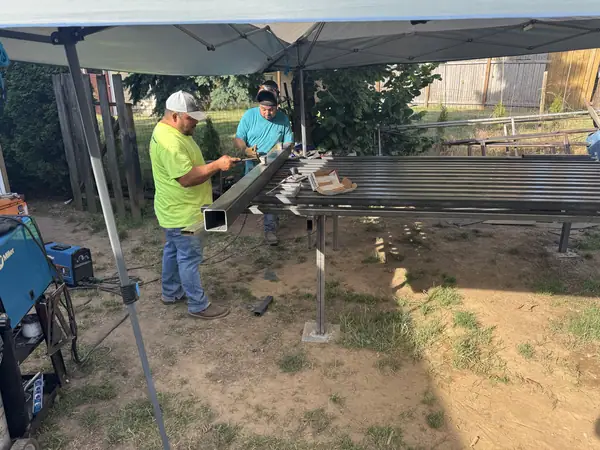
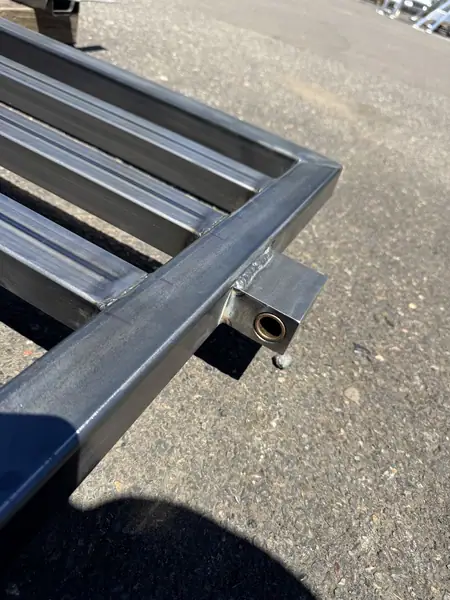
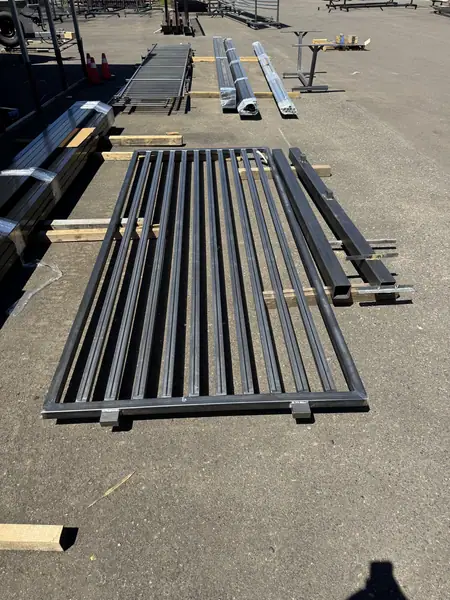
We measured the opening, then built the gate from raw steel: a frame with horizontal slats, welded, finished in black, and sized to this driveway. On install day it went up as a single swing leaf with a LiftMaster operator.
The driveway now closes with one black slat leaf, opened by its LiftMaster operator.
More on this kind of job: read our guides, Wood, steel, or aluminum gates and Sliding vs. swing gates.
Services on this job: Custom fabrication, Gate installation, Openers & automation. More about our work in Metzger.
Good to know
Slope decides first. A swing gate needs level ground through its whole arc, so a driveway that rises behind the gate usually pushes you to a slider or to up-swing hinge hardware. Space decides next: a swing leaf needs room to travel without hitting a parked car or the garage, while a slider needs a clear run along the fence line roughly as long as the opening itself. Surface matters too: track sliders collect trouble on gravel, which is why we usually spec cantilever sliders on gravel drives; a cantilever also rides out our occasional ice storms better, since there's no ground track to freeze or fill with debris. On cost, a single swing gate is generally the simplest install, sliders add track or cantilever hardware, and bi-parting setups mean two operators. We measure your driveway and tell you which one won't fight you for the next decade.
Automated gates fall under the UL 325 standard, which requires entrapment protection, typically photo eyes and contact edge sensors that stop or reverse the gate if something is in its path. The standard also expects pedestrians to have their own entry separate from the vehicle gate's travel path, which is one of the main reasons we build walk gates. Every automated gate we touch leaves with working safety devices, and we test them on existing installs too.
Once your gate is fabricated, most residential installations take one to two days on site: setting posts, hanging the gate, mounting the operator, cutting loops, wiring, and programming access. Concrete footings need time to cure before the gate hangs on them, so some projects split into two short visits. Custom fabrication adds lead time up front, which we give you when we quote, and we stick to it.
More answers on our gate installation, custom fabrication pages.
Picture this at your place? Call, or send the form. The estimate is free.
Free estimate
Every job on these pages started with a free site visit. Tell us about yours and we will quote it, free.
Prefer a human? Call or text (971) 459-1220
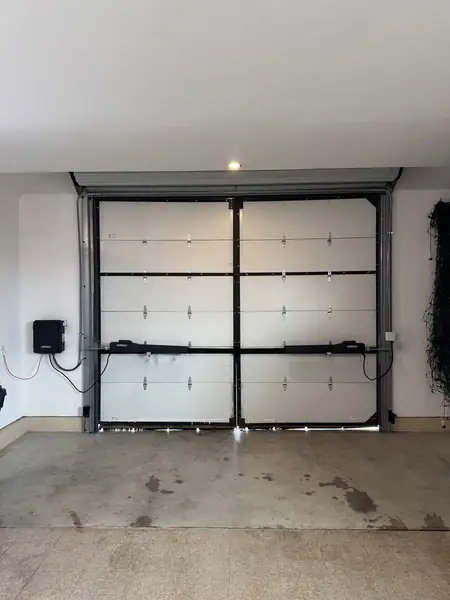
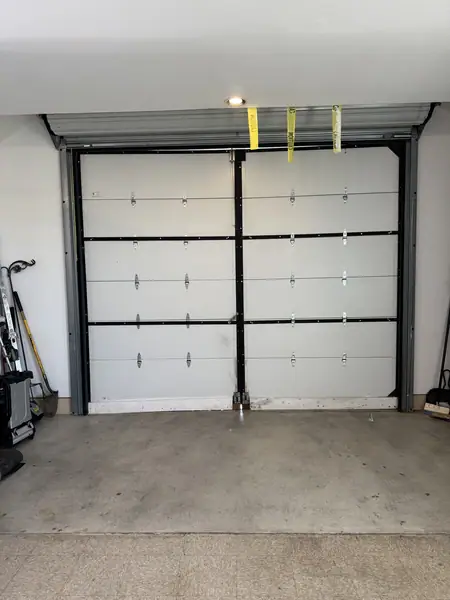 Before
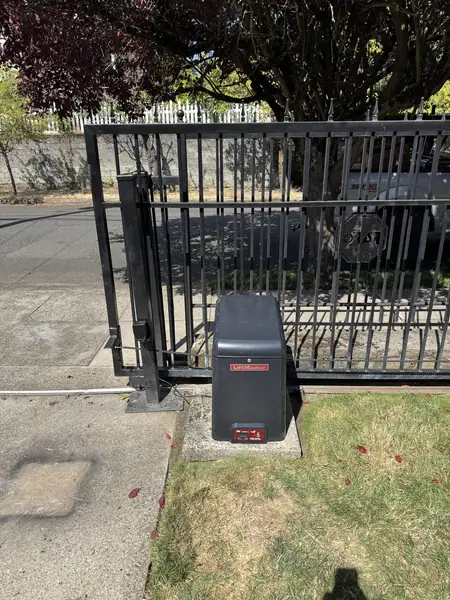
 Before